How to Trade Meme Coins Without Getting Burned
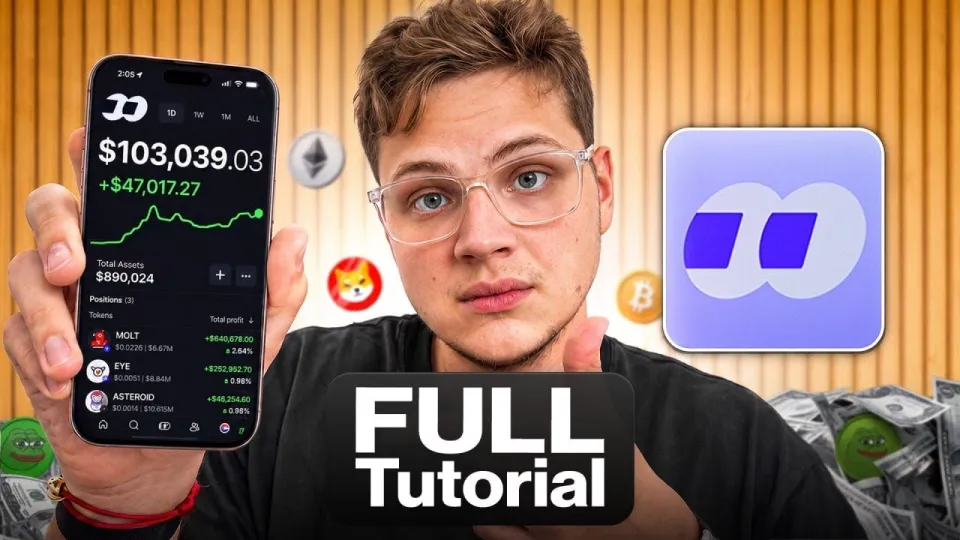
Video: How To Make Money Trading Memecoins (fomo app tutorial)
You can order the same kind of articles for your own video to boost it on YouTube and Google. Just message the Telegram bot @sat_sit_bot. Articles with your video embedded are written and posted by the bot itself — on popular topical sites (no ads). Your first 50 articles are free.
· based on the channel Orangie Web3
Key takeaways
- Meme coins are community-driven tokens with no cash flow; price is set purely by attention and liquidity, so gains come from timing and exits, not from fundamentals.
- The fomo platform (fomo.family) is a social trading app where you follow wallets, see other traders' positions and buy tokens with a few clicks.
- Copy-trading big wallets is the most common loss-maker: large traders often pre-buy on a separate wallet before buying on their main one, so followers buy the top.
- Position sizing of 1–5% of a trading bankroll per meme coin trade is the standard risk rule, because a single token can drop 80–90% in minutes.
- Price alerts and pre-set exit levels matter more than entry skill; viewers of the Orangie Web3 tutorial named missing alerts as the app's main gap.
Meme coin trading is the practice of buying and selling tokens whose price is driven by community attention and liquidity rather than by revenue, products or cash flow — and the only reliable way to make money at it is to control position size, enter early and take profit before the crowd exits. Tools like the fomo social trading app shorten the path from seeing a coin to owning it, but they do not remove the need for a plan. This guide breaks down how meme coins actually move, how a fomo-style workflow looks in practice, and which mistakes cost traders the most money.
What a meme coin actually is and why it moves so fast
A meme coin is a token with no intrinsic claim on anything: no equity, no dividend, no protocol fee share. Its price is a pure function of how many buyers want in versus how many holders want out at any given second. That single fact explains almost every behaviour you will see: a coin can go from a $40,000 market cap to $4 million in an hour because a few hundred people decided it was funny, and back to $60,000 because the first big holder sold into the hype.
Three mechanics drive the speed:
- Thin liquidity. On Solana launchpads, a new pair may hold only tens of thousands of dollars in the pool. A $2,000 buy can move the price several percent; a $20,000 sell can wipe out a third of the chart.
- Attention as the only catalyst. A post, a meme format going viral, or a well-known trader posting a position is the entire fundamental case. When attention stops compounding, price stops rising.
- Reflexivity. Rising price attracts viewers, viewers attract buyers, buyers push the price higher — until the same loop runs in reverse. Meme coins are the clearest example of a reflexive market in crypto.
Because of this, meme coins are a trading instrument, not an investment. Treat every position as a short-lived bet with a defined amount you can afford to lose entirely.
How the fomo app fits into a meme coin workflow
The fomo platform is a social trading interface: you connect a wallet, browse coins that other users are buying, see live positions and market caps, and execute trades without leaving the feed. The pitch is speed and visibility — you learn what is moving from people rather than from a chart screener.
A typical session looks like this:
- Fund a dedicated wallet. Keep a separate trading wallet with only the money you have allocated to meme coins. Never connect a wallet that holds long-term assets.
- Scan the feed for unusual activity. Look for coins with a rising number of distinct buyers, not just a rising price. One wallet buying repeatedly is a red flag; twenty new wallets is a signal.
- Check liquidity and holder distribution before buying. A healthy launch has a wide spread of holders and liquidity that is at least several times your intended position size.
- Buy in one small clip. Entering with 1–5% of your bankroll keeps a total loss survivable and leaves room to average in if the thesis holds.
- Set an exit before you need it. Decide the market cap at which you sell half and the level at which you cut the rest. Write it down; do not improvise while the chart is moving.
Tools like fomo are convenience layers, not edge. The edge is your process: sizing, entries and exits.
Position sizing and exit rules that keep you solvent
The most common reason meme coin traders end up with nothing is not bad picks — it is position sizing. If a single trade can take out a third of your account, a normal string of losses will end your run before a winner arrives.
A workable framework:
- Bankroll split. Keep meme coin capital separate from everything else. If the total is $1,000, a single position is $10–$50.
- Scale out, don't hope. Selling 50% at 2x locks in a free position for the rest; selling 25% at each of several targets smooths the emotional load.
- Hard stop on the thesis, not the price. If the reason you bought (holder growth, a specific community, a narrative) disappears, exit even if the chart looks flat.
- Time stop. If a coin has not moved within your expected window, the attention thesis failed. Capital tied up in a dead chart is a cost.
- No averaging down on illiquid launches. Adding to a loser in a pool with $30,000 of liquidity usually means buying the exit liquidity of someone larger.
A useful sanity check: before buying, ask what a 90% drawdown would do to your week. If the answer is "ruin my month", the position is too big.
The copy-trading trap and other common mistakes
The single most repeated warning among experienced meme coin traders is that copying large wallets is structurally late. Big traders frequently buy a coin on a secondary wallet before they buy on the wallet you are watching, so by the time the visible buy appears, the price has already been pushed up by design. Followers become the exit liquidity for the very trade they are imitating.
Other recurring mistakes:
- Chasing a chart that already went vertical. Buying after a 10x candle means your entry is someone else's profit.
- Ignoring holder concentration. If the top ten wallets hold most of the supply, the chart is a countdown, not an opportunity.
- Trading without alerts. Meme coin moves happen in minutes; if you cannot watch the screen, you need notifications or you need to size down.
- Confusing a good story with a good entry. The narrative can be genuine and the price still be wrong.
- Skipping the wallet hygiene step. Approving unknown contracts or connecting a main wallet to a fresh launch is how people get drained.
Questions traders ask before their first meme coin trade
Beginners usually want the same handful of answers, and they are worth stating plainly.
How much can I realistically make? Nothing is guaranteed, and most trades will be small losses or scratches. The model that works is many small positions where a few 2x–5x wins pay for the rest. Anyone promising consistent 100x returns is selling a narrative, not a method.
Is it too late to start? Meme coins are cyclical. New launches appear every week, so there is always a next cycle — the constraint is your capital and discipline, not the calendar.
Do I need to watch the screen all day? Not all day, but you need a way to be notified. If you cannot monitor positions, trade smaller and use fewer, higher-conviction entries.
What about tools and alerts? A frequent request from users of social trading apps is native price alerts; until those exist, set alerts through a charting tool or a wallet notification service and treat them as part of your setup.
Useful links
- fomo trading platform — sign-up via Orangie's referral link
- Orangie's Discord community for meme coin discussion
- Orangie on Instagram
Final thoughts on trading meme coins responsibly
Meme coin trading can be profitable, but only as a disciplined, small-size activity with pre-planned exits and strict wallet hygiene. The tools are the easy part: a social trading app gets you from idea to order in seconds, and that speed cuts both ways. What separates traders who last from those who reload a drained wallet is sizing, a written exit plan and the willingness to skip most setups. The walkthrough above follows the workflow demonstrated by the Orangie Web3 channel, whose fomo tutorial is a practical starting point for anyone learning the interface — start with the fomo registration link, fund a small dedicated wallet, and treat your first twenty trades as tuition rather than income.
Source: How To Make Money Trading Memecoins (fomo app tutorial) · Markdown version
Questions & answers
How much money do I need to start trading meme coins?
You can start with a small amount, but the size matters less than the proportion. A common approach is to allocate a separate bankroll and risk 1–5% of it per trade, so a total loss on one coin does not end your run. Many traders begin with a few hundred dollars purely to learn execution and exits.
Why is copy-trading large wallets usually a losing strategy?
Large traders often buy on a secondary wallet before buying on the wallet you can see, which pushes the price up before followers enter. By the time a visible buy appears, you are buying at a worse price and may be providing exit liquidity. Copying also removes your own exit plan, which is where most of the risk control lives.
What is the fomo app and what does it do?
fomo is a social trading platform where you can follow wallets, see other users' positions and buy tokens directly from a feed. It shortens the path from spotting a coin to owning it, but it does not replace position sizing, liquidity checks or a pre-set exit strategy.
How do I avoid getting my wallet drained?
Use a dedicated trading wallet that holds only the money you have allocated to meme coins, never your main holdings. Avoid approving unknown contracts, verify token addresses before buying, and treat any link asking you to sign something unexpected as hostile.